



Contents
- Root Canal Treatment Prices in Turkey 2023
- What is Endodontics (Canal Treatment)?
- How Much Root Canal Treatment Prices in Turkey? 2023
- How is Endodontics (Canal Treatment) Performed?
- How Long Does Endodontics (Canal Treatment) Take?
- Does Endodontics (Canal Treatment) Hurt?
- Who is Endodontics (Canal Treatment) Applied to?
Root Canal Treatment Prices in Turkey 2023
The prices for root canal treatment in Turkey can vary depending on the location of the dental clinic, the qualifications of the dentist, and the type of procedure used. However, on average, the prices for root canal treatment in Turkey tend to be lower than in other countries such as the US or Western Europe.
Root canal treatment can take one or more appointments, depending on the complexity of the case. The procedure is typically done under local anesthesia to numb the tooth and surrounding area. After the procedure, the patient may experience some mild pain and sensitivity for a few days, but this can usually be managed with over-the-counter pain medication.
What is Endodontics (Canal Treatment)?
Endodontics is a branch of dentistry that deals with the diagnosis, prevention, and treatment of diseases and injuries of the dental pulp (the soft tissue inside the tooth) and the surrounding tissues of the tooth’s root. The most common endodontic treatment is a root canal, also known as endodontic therapy.
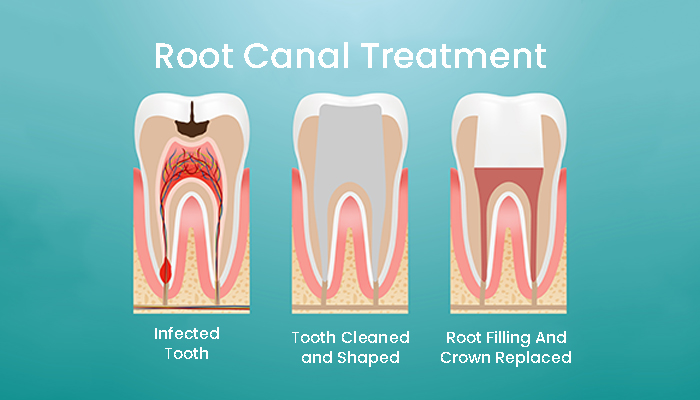
A root canal is a procedure used to save a tooth that has become infected or inflamed. During a root canal, the dentist or endodontist will remove the infected or inflamed pulp, clean and disinfect the inside of the tooth, and then fill and seal the tooth to prevent further infection. A crown is usually placed on top of the tooth to protect it and restore its function.
Endodontic treatment can be a successful way to save a tooth that would otherwise need to be extracted. It can also prevent the need for more extensive and expensive dental treatment in the future.
How Much Root Canal Treatment Prices in Turkey? 2023
It’s important to note that these are approximate prices and can vary depending on the location of the clinic, the qualifications of the dentist, and the type of procedure used. Also, prices may vary based on the type of tooth, the complexity of the case, and the materials used.
Here are some examples of approximate prices for root canal treatment in Turkey in 2023:
- Root canal treatment for a front tooth: around $200 – $300
- Root canal treatment for a molar tooth: around $300 – $500
- Root canal treatment for a complex case: around $500 – $800
It’s always a good idea to research different dental clinics and compare prices before scheduling an appointment. It’s also important to check the qualifications of the dentist and the success rate of the clinic.
It is also important to keep in mind that these prices are for the root canal treatment only and don’t include the cost of travel, accommodation, and other expenses related to traveling to Turkey for dental treatment.

How is Endodontics (Canal Treatment) Performed?
Endodontic treatment, also known as a root canal, is typically performed by a dentist or an endodontist, who is a specialist in treating the inside of the tooth. The procedure is typically done under local anesthesia to numb the tooth and surrounding area.
The steps of the procedure are as follows:
- Access: The dentist or endodontist will make a small opening in the top of the tooth to access the pulp chamber and root canals.
- Pulp removal: Using specialized instruments, the dentist or endodontist will remove the infected or inflamed pulp from the pulp chamber and root canals.
- Cleaning and shaping: The pulp chamber and root canals are then cleaned and shaped with small files to prepare them for filling.
- Medication: An antimicrobial solution may be placed in the tooth to kill any remaining bacteria and to reduce inflammation.
- Filling: The pulp chamber and root canals are then filled with a rubber-like material called gutta-percha and sealed with a cement-like material.
- Restoration: A temporary filling is placed in the opening on top of the tooth to protect it until a permanent restoration, such as a crown, can be placed.
The entire procedure usually takes between one to two hours, but it can take longer in some cases. After the procedure, the patient may experience some mild pain and sensitivity for a few days, but this can usually be managed with over-the-counter pain medication.
It’s important to note that after the root canal treatment, the tooth is still alive and needs to be restored. Most commonly, a dental crown is placed on the tooth to protect it and restore its function.

How Long Does Endodontics (Canal Treatment) Take?
The duration of an endodontic treatment, also known as a root canal, can vary depending on the complexity of the case. The procedure typically takes between one and two hours, but it can take longer in some cases.
The following factors can affect the duration of the procedure:
- Number of canals: Molars typically have more canals than premolars or incisors, which means that they may take longer to treat.
- Calcification: If the canals are calcified, it can make them more difficult to clean and shape, which can add time to the procedure.
- Complications: If there are any complications, such as a blockage or a curved canal, it can add time to the procedure.
- Restoration: The duration of the procedure can be longer if a permanent restoration, such as a crown, is placed on the same day as the root canal treatment.
It’s important to note that the duration of the procedure may also depend on the dentist or endodontist performing the procedure, as well as the facilities and equipment available.
It’s also worth noting that a root canal treatment usually requires more than one appointment, the first one for the cleaning and shaping, and the second one for the permanent restoration. The time between the appointments can vary depending on the availability of the patient, the dentist, and the dental lab.
Does Endodontics (Canal Treatment) Hurt?
Endodontic treatment, also known as a root canal, is typically performed under local anesthesia to numb the tooth and surrounding area, which should make the procedure relatively painless during the treatment. However, some patients may feel pressure or mild discomfort during the procedure.
After the procedure, the patient may experience some mild pain and sensitivity for a few days, which is a normal part of the healing process. This can usually be managed with over-the-counter pain medication, and the symptoms usually subside within a few days.
It’s important to note that the pain and discomfort experienced after the procedure can vary from person to person and can depend on factors such as the complexity of the case, the patient’s overall health, and their pain tolerance.
It’s also worth noting that if a tooth is already infected or inflamed, the patient might experience some pain before the treatment, and the root canal treatment can relieve that pain. After the treatment, the tooth should be symptom-free.
If the pain persists, or if you experience severe pain, swelling, or fever, you should contact your dentist or endodontist as soon as possible, as it may be a sign of a complication or an infection.

Who is Endodontics (Canal Treatment) Applied to?
Endodontic treatment, also known as a root canal, is typically applied to patients who have an infected or inflamed pulp in their tooth. The pulp is the soft tissue inside the tooth that contains nerves, blood vessels, and connective tissue. When the pulp becomes infected or inflamed, it can cause pain, swelling, and sensitivity. If left untreated, the infection can spread to the surrounding bone and cause an abscess, which can lead to further complications.
Endodontic treatment can be applied to both primary and permanent teeth, and it can be used to treat a variety of conditions, such as:
- A deep cavity or a crack in the tooth that has reached the pulp
- Trauma or injury to the tooth that has damaged the pulp
- Repeated dental procedures on the tooth that have caused inflammation or infection in the pulp
- A tooth that has had a previous root canal treatment that has failed
Endodontic treatment can be a successful way to save a tooth that would otherwise need to be extracted. It can also prevent the need for more extensive and expensive dental treatment in the future.
It’s worth noting that not all teeth that show symptoms require a root canal treatment, and a thorough examination and diagnosis is needed by the dentist or endodontist to determine if a root canal is the appropriate treatment.
Might Be Interested: Dental Braces Prices in Turkey 2023